Miu Law ✕ Sham Chung-tat

Miu Law ✕ Sham Chung-tat

In-venue Programme

Date
6 March 2026 (Fri) 7:30pm
Venue
Louis Koo Cinema, Hong Kong Arts Centre
Note

Conducted in Cantonese; Sharing sessions: Hong Kong Sign Language interpretation available

Accessibility Services
25
Sharing sessions: Hong Kong Sign Language interpretation available

In-venue Screening

Online Screening

#ffffff 0
About the Project

The (In)Visible Art of Cartography

Cartography is humanity’s attempt to record and understand the “invisible” world, visualising what would otherwise remain unseen. As a primarily visual tool projecting the observable world onto a scroll, maps inevitably exclude people with vision loss. Yet remarkably, the way visually impaired people live encapsulates the essence of cartography—the courage to explore and accurately document the unknown. Through sound, touch and smell, they build rich and exact understandings of space that compensate for what vision cannot provide. Using the body as a measuring device and sound as a boundary-setter, visually impaired people create their own memory maps. Drawing on the lived experiences of visually impaired people, theatre-maker Miu Law and sound artist Sham Chung-tat worked together to redefine the possibilities of mapmaking and what constitutes a “comprehensive” spatial experience.
#ffffff 0
Artist Interview
1. Could you describe the research and creative process?

We observed and recorded how visually impaired people create memory maps, such as using echoes to grasp spatial dimensions, or wind direction and smells to orient themselves. They have their own ways of navigating space. We tried to recreate these memory maps from different perspectives, exploring how the same spatial memory can be understood through different cognitive tools. Eventually, these representations of spatial memory will be reworked into an art installation that centres on faith and explores the world’s edge. Another strand of our research involves an interactive game that relies on audience participation. Audience voices become measuring tools, ultimately combined and distilled into a voice-controlled compass—a new kind of white cane for people with visual impairments.

#ffffff 0
2. How does sound become the core medium for this mapmaking project?

In this work, sound plays two entirely different roles: first, the interviewees’ memory maps will be transformed further into a sound installation that can be “touched” and “heard”. The resulting soundscape signifies a transformation of not only their worldview but also of how their geographical concepts become various soundscape designs within the exhibition. Second, sound becomes the very medium to reinterpret the mapmaking process. Through engaging audio exercises, the audience will be turned into measuring devices that can communicate with visually impaired individuals. Since inanimate objects cannot be heard, can we develop a special ability to make “them” voice themselves, allowing us to measure the world?

#ffffff 0
3. Has the project changed your understanding of “not seeing” as well as your perception of space?

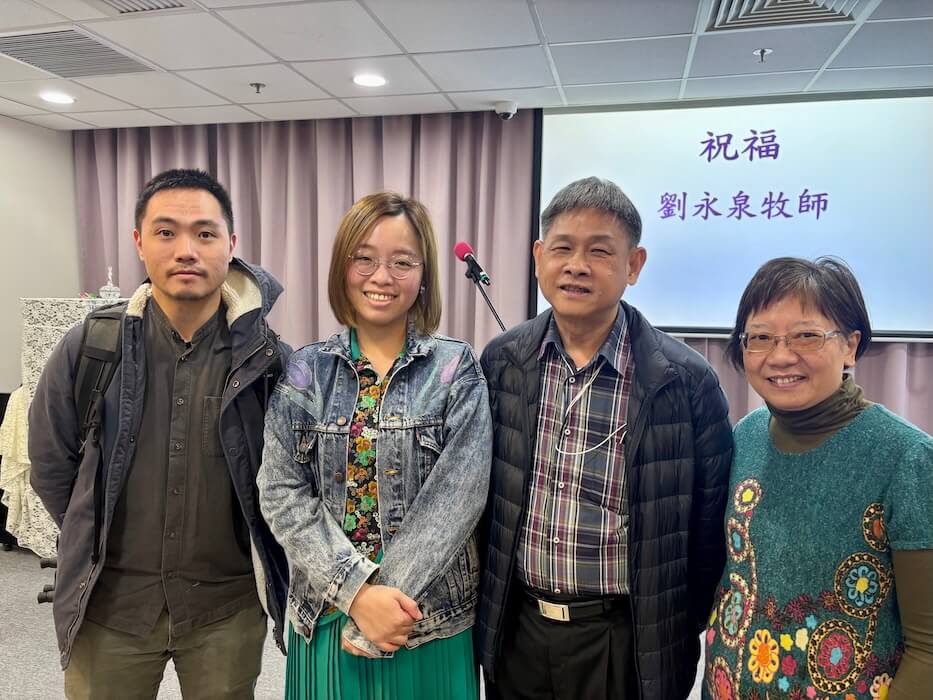
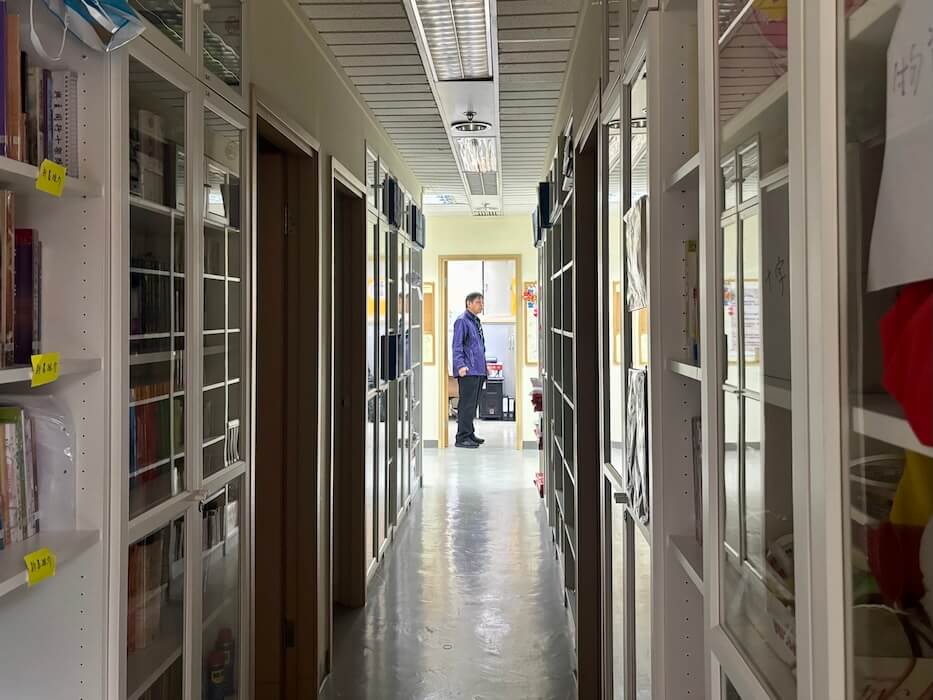
A key interviewee in this phase of the research was Miu Law’s uncle, a pastor with retinitis pigmentosa which caused gradual vision loss until he became blind. A key point of the study is whether certain shared family memories— details of festive celebrations, how relatives dressed and the ancestral home—remain vivid in his mind, or have faded over time. Is visual disability a sensory impairment affecting only the present, or does it also reshape memories and the past? At the same time, we revisit, through the lens of religious faith, the worldview built primarily on “seeing”: does seeing the world truly mean grasping it more fully?

#ffffff 0
4. In what form will the research findings be presented?

We will put together our experience in theatre and expertise in sound art to share our findings through sound installations and collective sound games. The presentation will take the form of a film screening followed by a launch. Through engaging games and myth-inspired installations, we hope to extend non-disabled individuals’ imagination of what life is like for their visually impaired counterparts and to cultivate a more inclusive and enriched shared experience.

#ffffff 0
About the Artist
#ffffff 0
Has Border
False
Image
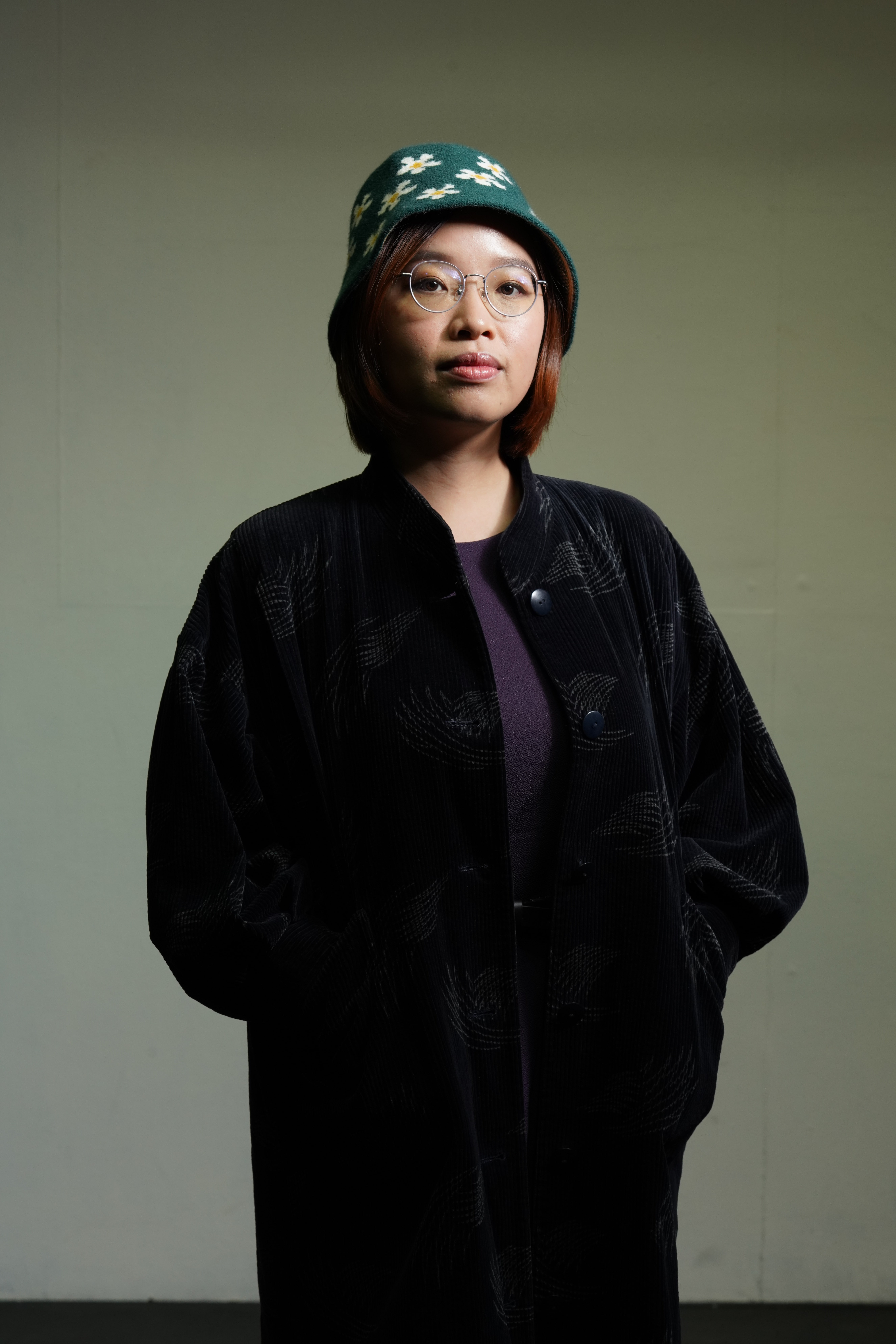
Photo of Miu Law

Miu Law

Miu Law is a Hong Kong-based independent arts curator, theatre-maker and writer. Her practice focuses on documentary theatre, often utilising interview-based research and involving non-professional performers. Law is a creative partner at On & On Theatre Workshop and a founding member of the arts collectives HerStory Polygon and Paperback Sketch.

#ffffff 0
Has Border
False
Image
Photo of Sham Chung-tat

Sham Chung-tat

Sound artist Sham Chung-tat graduated from the Hong Kong Academy for Performing Arts and gained an MA at the Berlin University of the Arts. A long-term sound designer for local theatre companies, Sham has served as co-director since 2023. His sound installations have been exhibited at the Prague Quadrennial HK Pavilion and Burning Man festival. Sham is also a founding member of the art collective Paperback Sketch. 
Photo
Photo Session - Miu Law and Sham Chung-tat 1
Photo Session - Miu Law and Sham Chung-tat 2
Photo Session - Miu Law and Sham Chung-tat 3
Has Border
False