The Nature of Why by Paraorchestra

The Nature of Why by Paraorchestra
In-venue Programme

Date
27 February 2026 (Fri), 3pm & 7:30pm
28 February 2026 (Sat), 3pm^ & 7:30pm^#
1 March 2026 (Sun), 3pm*

^ Pre-Performance Touch Tour
* No Limits 2026 Conversations: Artist Talk with Charles Hazlewood: Re-imagining the Orchestra (The talk will begin after the performance)
# The "No Limits" Opening Ceremony will take place prior to the performance
Venue
Auditorium, Kwai Tsing Theatre
Note
  • Approx. 60mins with no interval
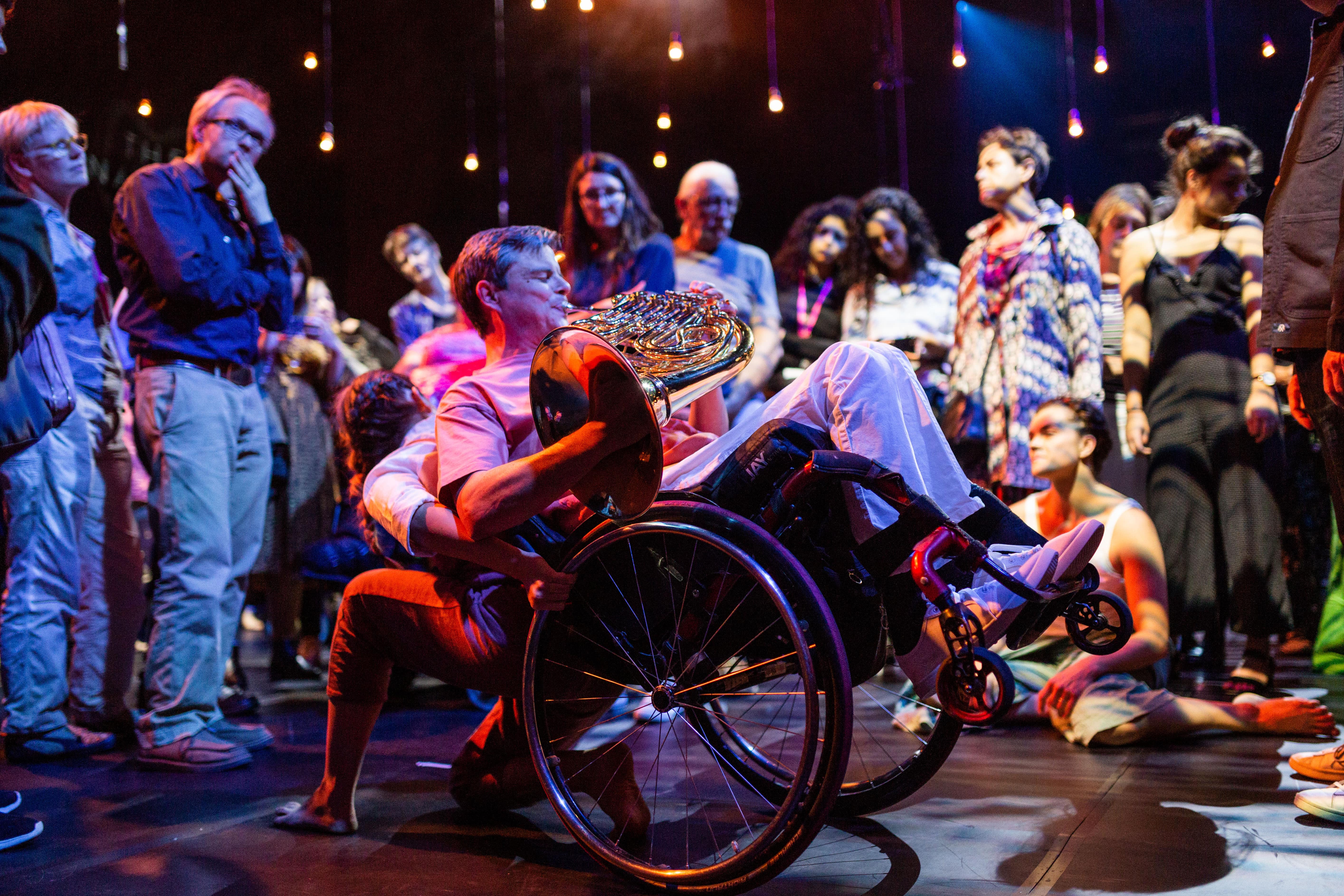
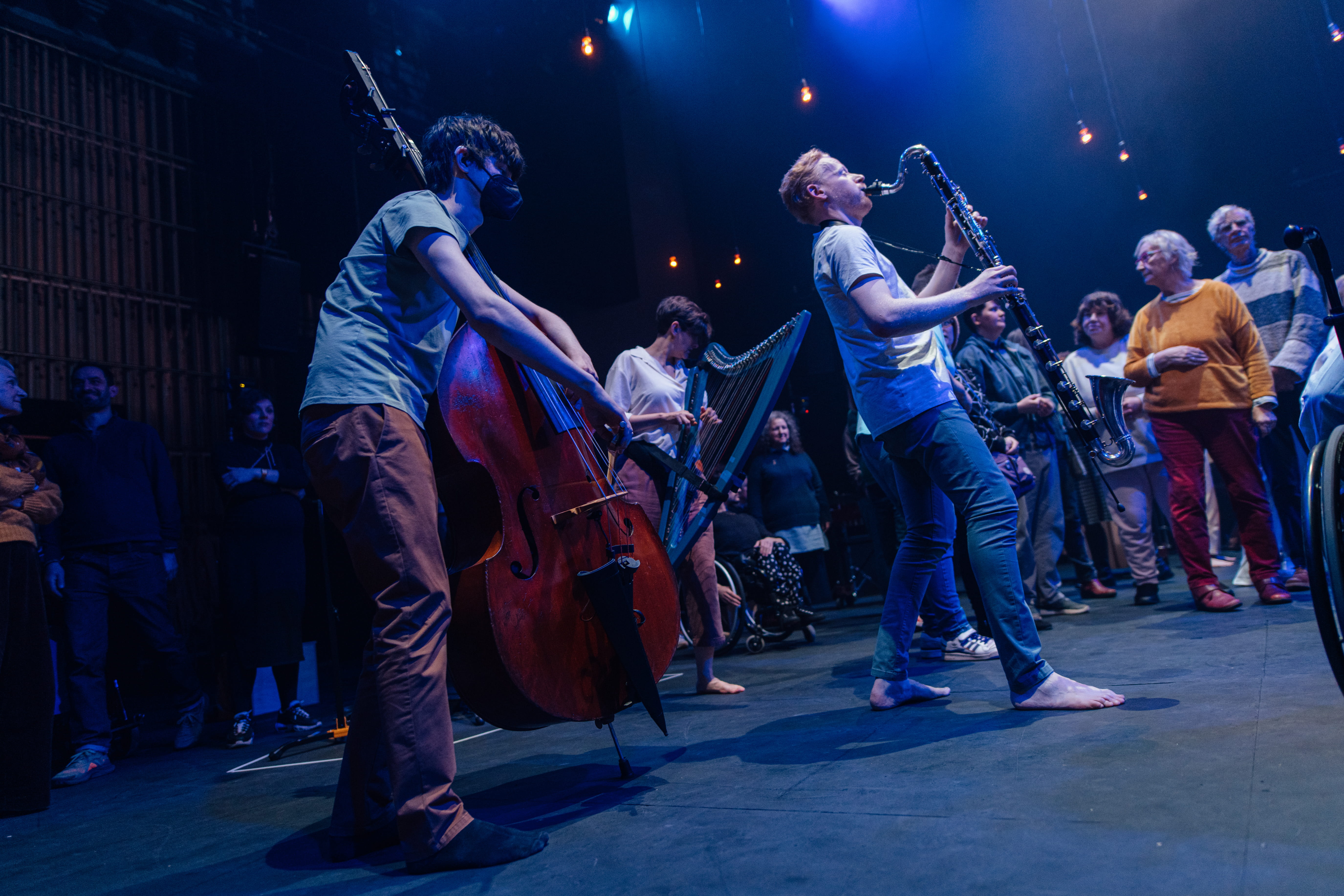
  • This is a standing performance. Audience are free to move around on the theatre stage.
  • This is a standing performance. A limited number of seats will be provided for audience members with accessibility needs.
  • The performance includes scenes with lower light levels.
  • Please switch off all sound-making and light-emitting devices.
Accessibility Services
3
70
25
4
Subtitles in Chinese and English, audio description and caption reading in Cantonese, Hong Kong sign language interpretation and house programme in audio format available

In-venue Screening

Online Screening

#ffffff 0
About the performance

All I Know is that I Know Nothing

“I can live with doubt and uncertainty and not knowing. I think it is much more interesting to live not knowing than to have answers that might be wrong...I am not absolutely sure of anything and there are many things I don’t know anything about, such as whether it means anything to ask why we’re here. I don’t have to know an answer.” This is the philosophy of the late Nobel Prize- winning theoretical physicist Richard Feynman. In an interview, when questioned about why magnets repel each other, his response became a classic philosophical insight—the very nature of “why.”

If we keep on asking “why,” we may gradually penetrate to the essence of things, though that may not be the “ultimate answer.” This philosophy captivated composer Will Gregory and Paraorchestra’s Artistic Director Charles Hazlewood, inspiring the creation of The Nature of Why. Hazlewood remarked, “Richard Feynman fascinates me with his unerring and unceasing determination to ask the question ‘why’ and to delve ever deeper. It is like peeling an onion - the more you peel, the more you want to peel and so it goes on. It’s never ending.” The fascination lies in the process of unravelling.

Composer Will Gregory’s work blends classical and pop styles, with the music shifting between sombre and joyful. It features rock energy of percussion and electric guitar alongside serene strings, seamlessly building towards a harmonious melody. The music envelops the audience through speakers positioned around the venue. Throughout the performance, monologues of Feynman weave between musical passages, serving as “commas” between each chapter. His voice and philosophical reflections add a touch of enigma to the performance, inviting the audience to reflect more deeply on themselves and to grow more curious about the world. Allowing oneself to “not know” paves the way to an enjoyable and endless journey of exploration.

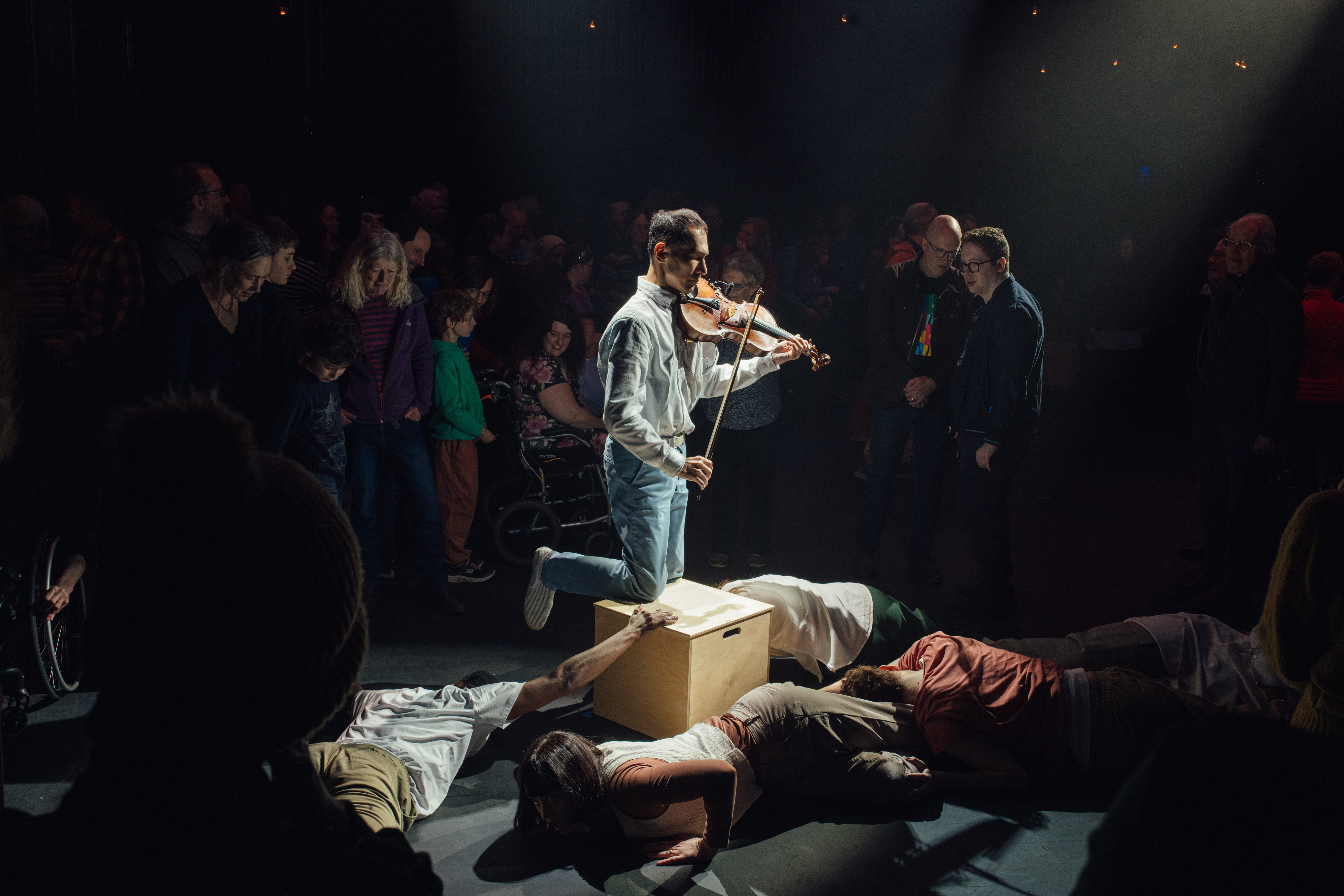
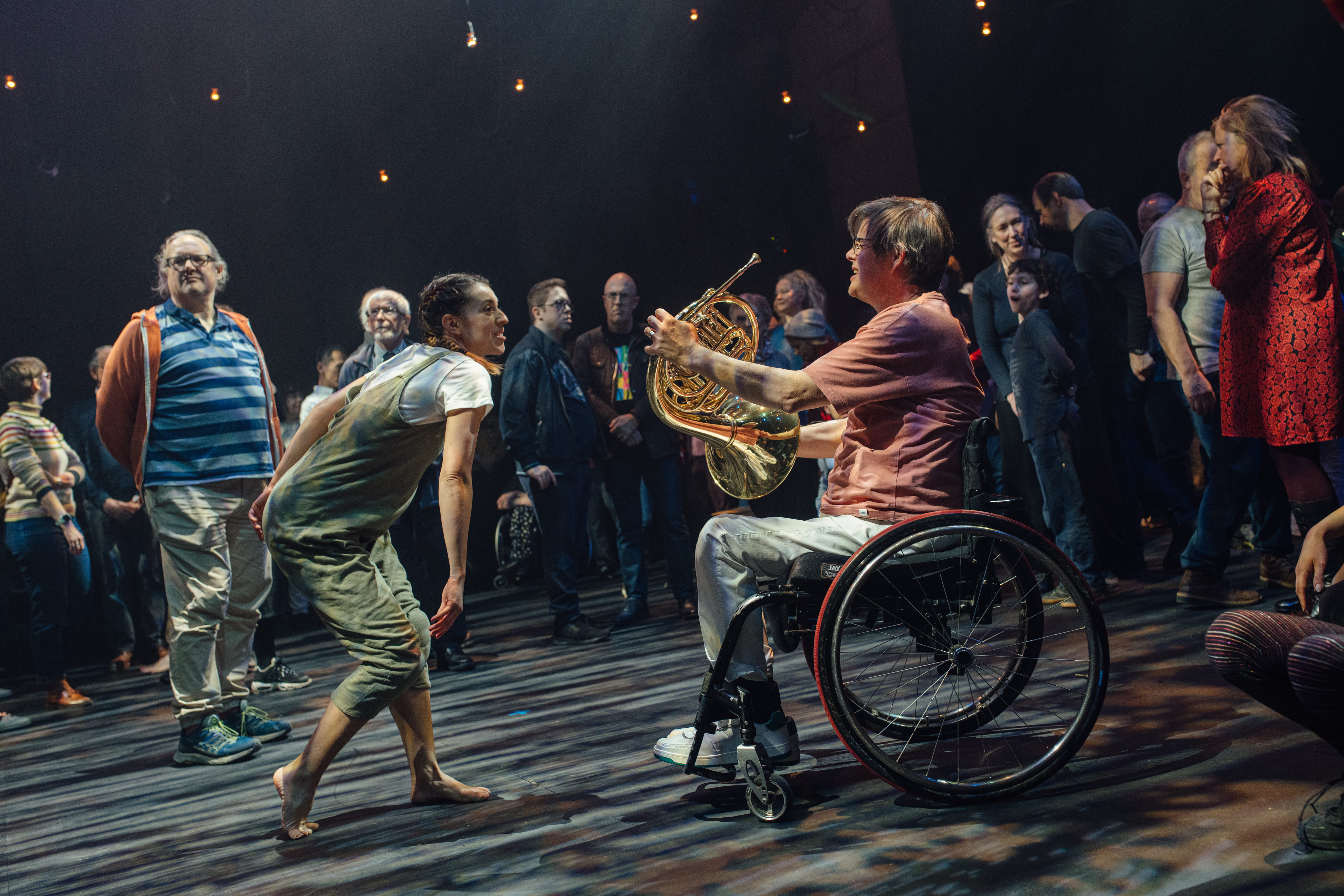
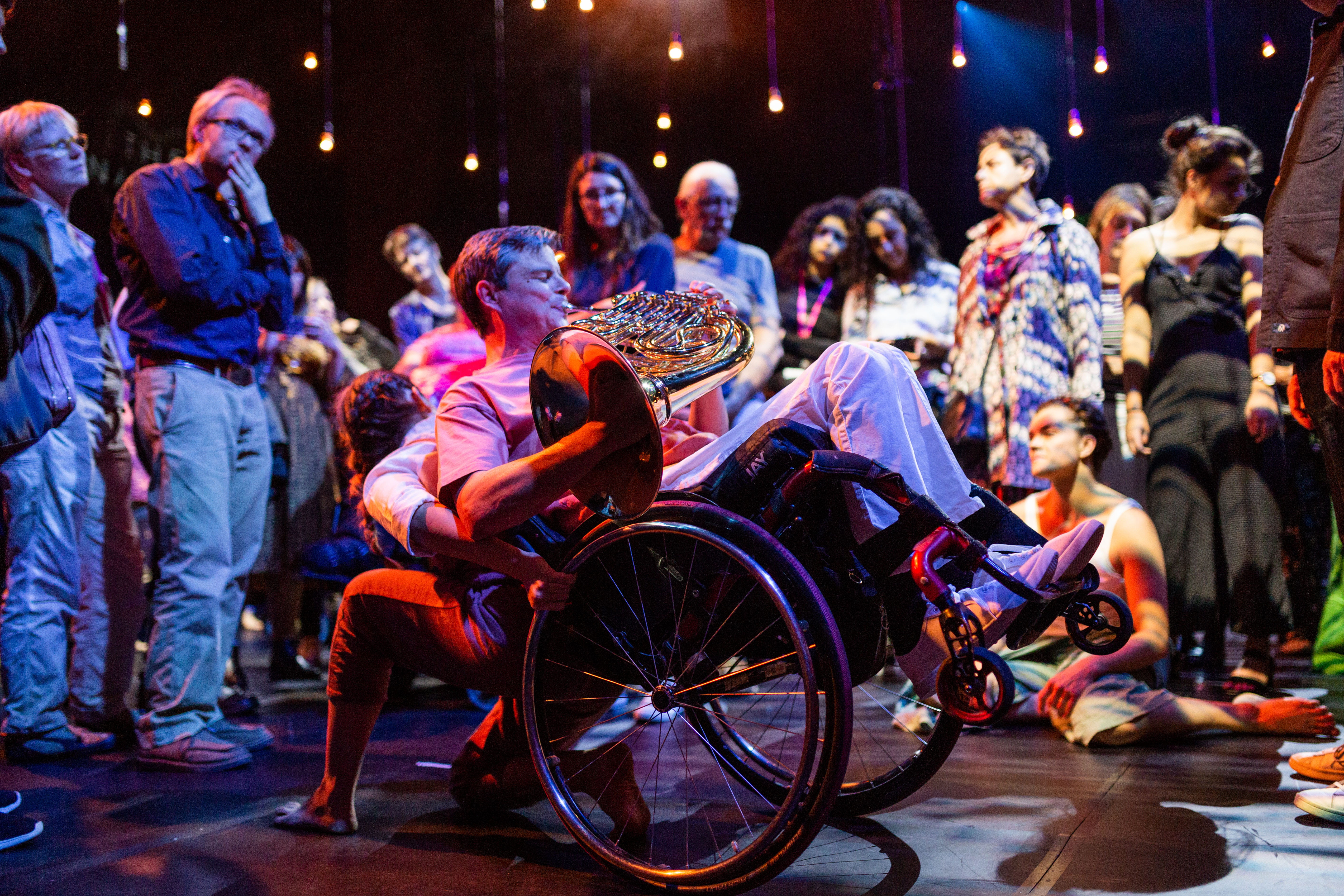
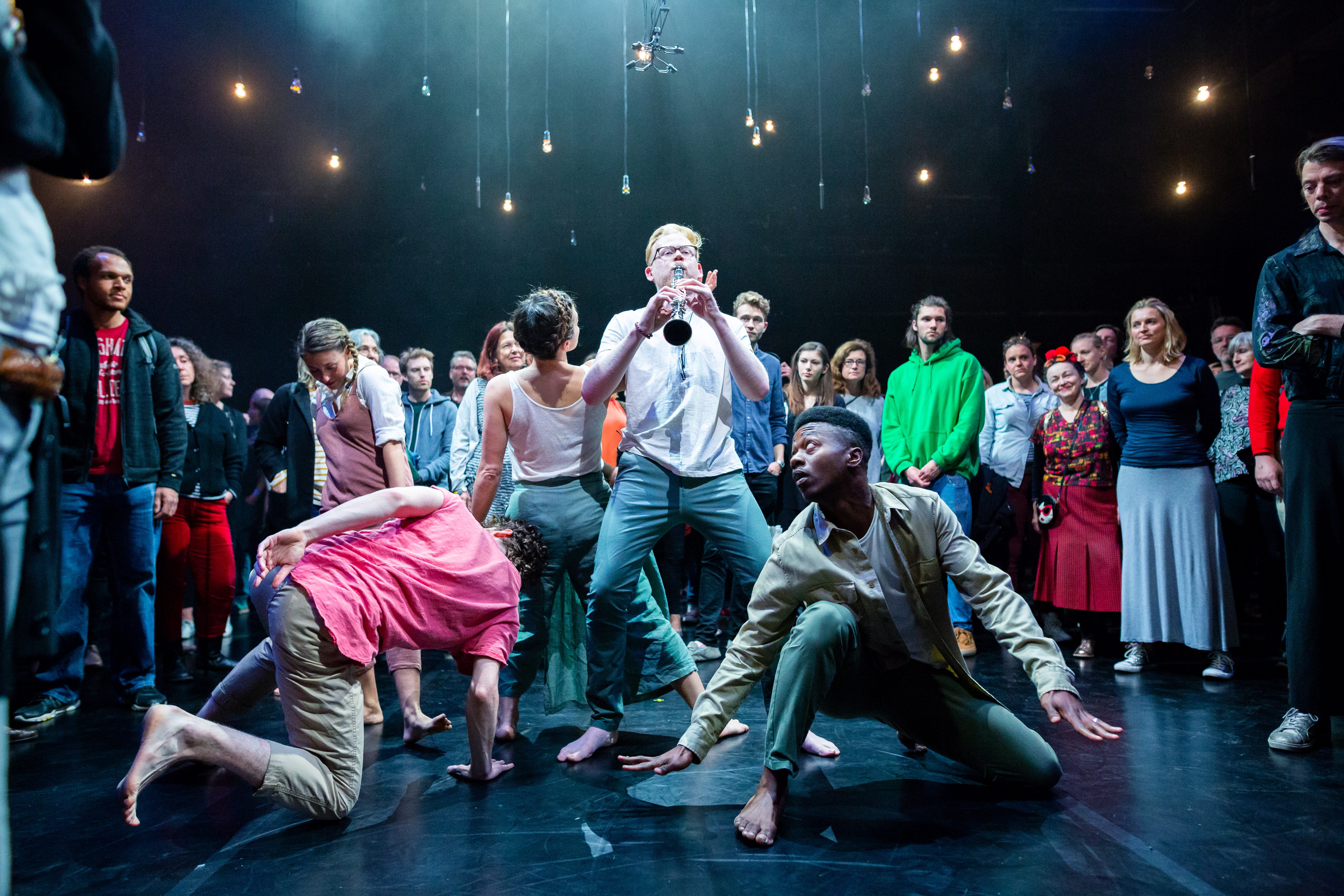
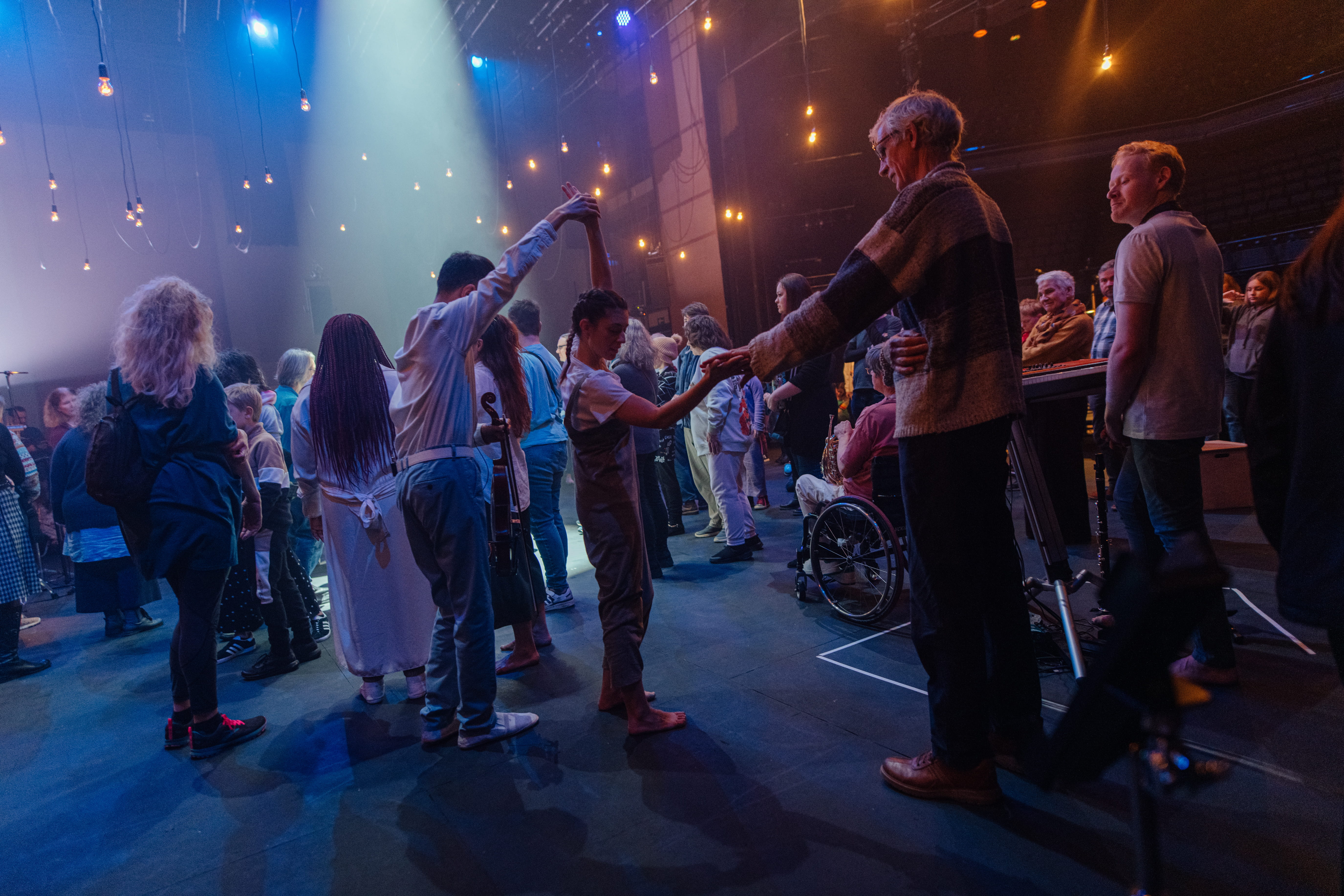
This cross-disciplinary, cross-genre creation is performed by Paraorchestra, the world’s first orchestra of musicians with and without disabilities. Through collaboration with choreographer Caroline Bowditch, musicians and dancers deliver an epic and immersive experience. During the performance, there is no division between stage and audience as the audience is placed within the stage while performers move around on the stage and perform next to the audience. The audience may move freely between musicians and dancers. “I want the audience to feel that they are driving the performance on stage. As the story unravels, the audience will discover that they are the focal point.” The dancers may improvise right before you, or other audience members may drift into your field of vision—prompting mutual observations of how each audience member experiences the performance. This boundary-less design delivers a unique and immersive visual experience, allowing us to viscerally feel our own state as spectators.
#ffffff 0
Interview with Charles Hazlewood, Artistic Director of Paraorchestra - “Difference” in Humanity is a Value
1. As a conductor, how do you approach conducting such an immersive, interactive experience compared to a traditional concert setting?

Hazlewood: Conducting works if there is a spirit of trust in the room. Provided there is a spirit of trust in the room, it does not have to be end-on like the traditional form. People discern their pulse and we move and pulse collectively. We do not need to be looking at each other, as is evidenced by people with visual impairments who play in the orchestra. It is a sensory and spiritual experience as we are all connected by a kind of strange set of “cosmic antennae”.

#ffffff 0
2. Can you recall a memorable moment that captured the spirit of the show’s inquiry into curiosity and uncertainty?

Hazlewood: When we premiered the piece at Southbank Centre in London, the string section (the seated contingent of the orchestra) got off their seats to do what we call the “infinity mirror” where they stand in a long line and mirror each other. While they were doing that, a very curious member of the audience decided to go and sit in one of the cellist’s chairs. She clearly wanted to feel what it was like to be a cellist. When the said cellist came back to take that chair, the woman would not move. And so, the cellist actually had to play the next piece of music standing up. I thought that was brilliant.

#ffffff 0
3. How does The Nature of Why, from creative conception to rehearsal to production, fit into your broader vision for Paraorchestra and inclusive music-making?

Hazlewood: The fact that it is not a typical performance, with the orchestra and their audience both on stage, is a clue to how it represents my thoughts and plans for Paraorchestra. This is an inclusive space where the artist is no more important than the audience. In fact, audience members are just as important as artists, which is the case in any performance. If you are sitting in serried ranks of stalls looking at a brightly lit stage at the far end, with the sumptuous and awe-inspiring sound of the orchestra emanating from it, you are impressed and quite possibly intimidated. That is not actually the case! They are fallible humans just like everyone else! Music is an act of love, an act of communication from one to another. You need both in order for it to work. The Nature of Why is about telling a story—telling a really important story and telling it with love. So, it continues the orchestra’s philosophy and direction of travel.

#ffffff 0
4. What do you expect or hope the audience will take away regarding the central question and spirit behind The Nature of Why?

Hazlewood: I hope they will say, “We had a really good time.” I also hope they will go away feeling emboldened to ask the question “why” about everything. Because isn’t curiosity a wonderful fact of humanity? Without curiosity, where would we be but dead inside? Just like Feynman who asked questions on the depth of “why” beyond what most of us can imagine. He is perhaps the physics version of Beethoven or Mozart. He just digs so deep and makes it discernible to your eye. So, he is a bit of a genius and my relationship with him remains as hot as ever. I hope they will go away with a pronounced sense that difference in humanity is a value and not a curse.

#ffffff 0
Interview with Choreographer & Director Caroline Bowditch - Imagining the Body in State of Repulsion or Attraction
1. What was the philosophy behind the choreography in terms of its flow, movement, and the interactions with the audience?

Bowditch: The dance and the music were being created simultaneously, but I was very much responding choreographically to the concepts of the work which come from a piece of text by Richard Feynman. We really wanted to play with that idea of bringing the audience onto the stage, to have that sensation of what it is to look at an empty auditorium. As an artist, I am not very good at having a passive audience. I do not respond well to the thought of “I am here to entertain you,” but actually “we are here to have a conversation or an interaction.” I want this to be a meaningful interaction, and I want it to leave you feeling something—which I think we achieved. I wanted everyone to access everything. I wanted every show to be relaxed. I wanted wheelchair users to have the freedom to go wherever they wanted, because what I never experienced at the theatre was having much choice about where I put myself. That choice is made for me based on the infrastructure of the building. So yes, it was pretty “selfish” to have the freedom of “I want to be able to go wherever I want to go.”

#ffffff 0
2. How does the dance help express ideas about “uncertainty” and wonder? And how does it echo the physics of the attraction and repulsion of magnets as mentioned by Feynman?

Bowditch: Magnets, attraction and repulsion are brilliant things to work with in a dance context. I invited the dancers to “imagine that your right hand has to repel and your left hand has to attract,” and for them to work out how that might work in making contact with another dancer or moving in a space. We also worked with the concept of magnets attracting and repelling different parts of your body to the floor. I think this show is doing things that other shows are not doing. It is very rare for an audience to be invited on stage. It is also very rare for a marimba to be spun on a stage. The show is very reliant on all the performers using all of their senses in the show. Everyone will experience their own version of this show. No two people will have the same experience because some people will join in, or not. People will have musicians that are very close to them or not. So, people will see different things. I wanted to create a work that could be viscerally felt—not just a show that you watch or listen to but a show that you feel. In that sense it is very human.

#ffffff 0
3. How do you engage the audiences and encourage participation through an immersive dance performance?

Bowditch: The dancers are ones that I have worked with for a long time, and they all had that incredible skill of being able to “read an audience member” and have a sense of whether someone wanted to come and interact with them or they were just happy to just be in amongst it and let it happen. And either way, it is perfectly fine. In our introduction, Charles and I make it really clear that this is an invitation, but it’s not an obligation. But I think that people get swept up in it and they become part of it without even realising. I trust the dancers to really “read” the room and do the right thing by the audience.

#ffffff 0
About the Artist
#ffffff 0
Has Border
False
Image
Picture of Charles Hazlewood

Artistic Director of Paraorchestra

Charles Hazlewood


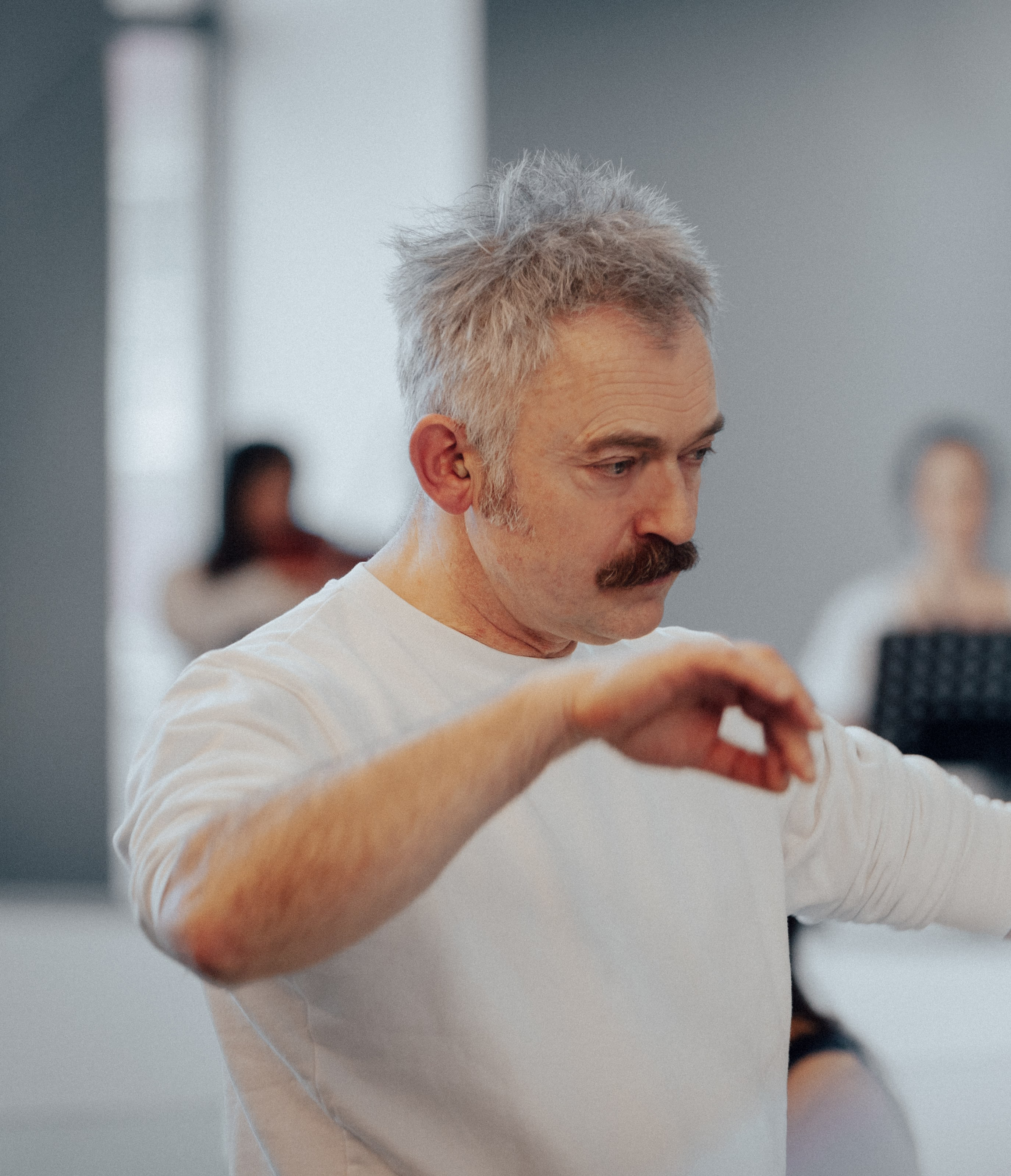
Charles Hazlewood is the artistic director of Paraorchestra, which he founded in 2012. While his conducting career includes many of the world’s most prestigious classical orchestras, he is also a trailblazer dedicated to creating ambitious, genre-busting works that upend orchestral orthodoxies. A recent highlight was conducting the orchestra’s debut at the 2024 BBC Proms. Hazlewood’s wider ranging work includes landmark music films for the BBC, multiple radio awards, and over 200 world premieres. He also founded an award-winning South African opera company Dimpho Di Kopane, whose film won the Golden Bear at the Berlin Film Festival. A three-time TED speaker and a Sky Arts Ambassador for music, his outstanding contribution to the UK’s musical life was recently honoured by leading charity Making Music. He was awarded an honorary doctorate in social inclusion by Bath Spa University in 2025.
#ffffff 0
Has Border
False
Image
Picture of Caroline Bowditch

Choreographer & Director

Caroline Bowditch


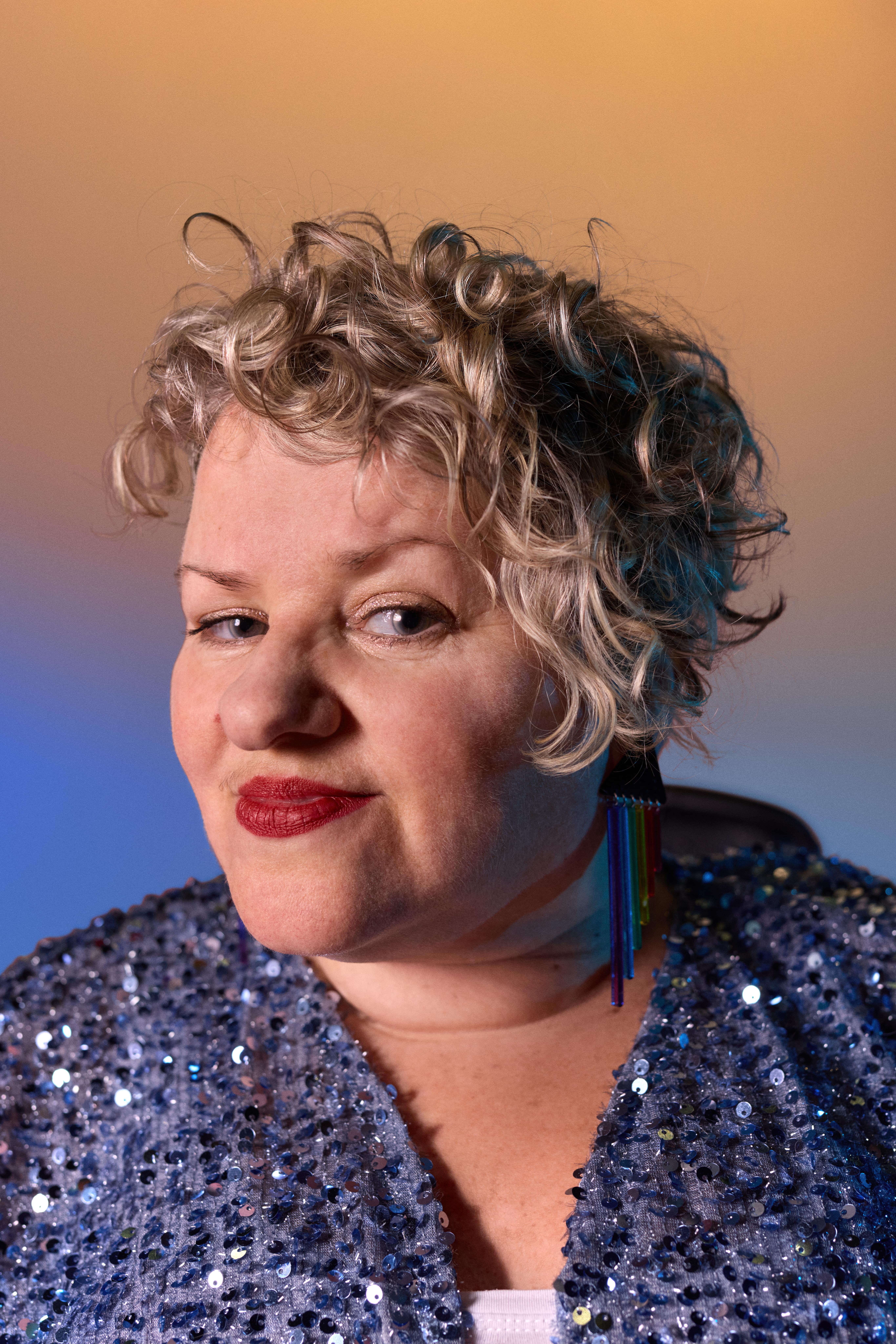
Caroline Bowditch is a proudly disabled queer woman and a distinguished leader in the arts and culture sector. She is globally recognised for her groundbreaking contributions to inclusive arts practices and dance advocacy. With over 15 years of experience, Caroline has carved a unique niche in the industry by combining her artistic vision with a passionate commitment to accessibility and diversity. Her career highlights include her recent position as the CEO of Arts Access Victoria, where she significantly expanded the organisation’s reach and impact. Caroline’s artistic endeavors are equally impressive, her work has been showcased at renowned venues and festivals internationally, including the Edinburgh Fringe Festival and with renowned companies like Candoco Dance Company and Skåne Dansteater in Sweden. Bowditch is also a sought-after consultant and advisor, including working with National Cultural Policy development in Australia and facilitating international arts initiatives. Her commitment to inclusivity is evident in her current board positions with Creative Australia, Arts Centre Melbourne, Theatre Network Australia and Theatre Works, where she continues to shape the future of the arts sector.
#ffffff 0
Has Border
False
Image
Photo of Will Gregory

Composer

Will Gregory


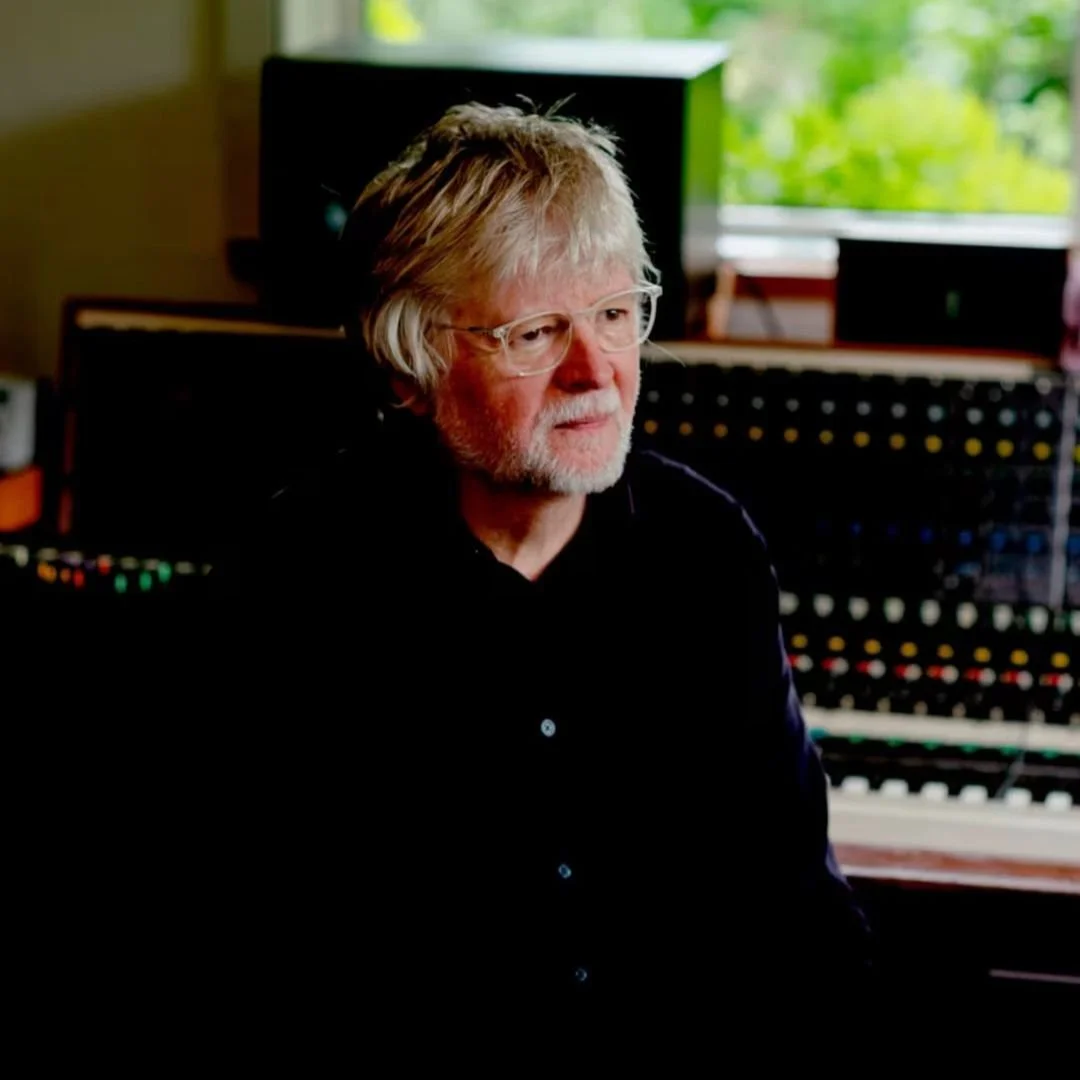
Will Gregory is an acclaimed multi-instrumentalist, composer and producer, and is one half of electro-pop duo Goldfrapp, who have released seven albums since forming in 1999. In 2011, Gregory's first opera, Piccard in Space, premiered at the Queen Elizabeth Hall, London. Gregory also writes and tours with his award-winning Moog Ensemble.
Creative and Production Team
Position
Team Member
Composer
Will Gregory
Choreographer
Caroline Bowditch
Conductor
Charles Hazlewood
Directors
Caroline Bowditch and Charles Hazlewood
Production Manager
Dean Sudron
Stage Manager
Paul Brown
Sound Engineer
Simon Honywill
Lighting Designer/Operator
Seb Blabber
Programme Director
Hannah Williams Walton
Producer
Ailie deBonnaire
Assistant Producer
Caitlin Fairweather
#ffffff 0
Has Border
False
Performers
Role
Performer
Vocal
Victoria Oruwari, Joanne Roughton-Arnold
Guitar
Dom Coyote
Percussion
Eddy Sayer, Harriet Riley, Jonny Leitch
French Horn
Isaac Shieh
Harp
Steph West
Clarinet
Lloyd Coleman
Double Bass
Patrick Phillip
Viola
Siobhan Clough
Strings
Hong Kong New Music Ensemble:<br>
First Violin: Amelia Chan, Patrick Yim, Elizaveta Koshkina<br>
Second Violin: Kitty Cheung, Sunny Yeung, Vanessa Chan<br>
Viola: William Lane , Chan Wai Bun<br>
Cello: Pun Chak-yin<br>
Double Bass: Simon Hui
Dance
KJ Clarke Davis, Marta Maseiro, Nicole Guarino, Philip Alexander McDonald
#ffffff 0
Has Border
False

MARTIN Audio system supported by Generation AV

"The Nature of Why" was commissioned and supported by Unlimited and premiered at Mayfest, Bristol 2018.

#ffffff 0
Photo
Photo of Nature of Why 1
Photo of Nature of Why 2
Photo of Nature of Why 3
Photo of Nature of Why 4
Photo of Nature of Why 5
Photo of Nature of Why 6
Has Border
False